
杨贵妃秘史
How China's new environmental code translates national ecological goals into everyday rules_我的网站

一 | AI摘要
8月20日,福建省首届“闽盾杯”网络安全职业技能竞赛决赛在福州举行。
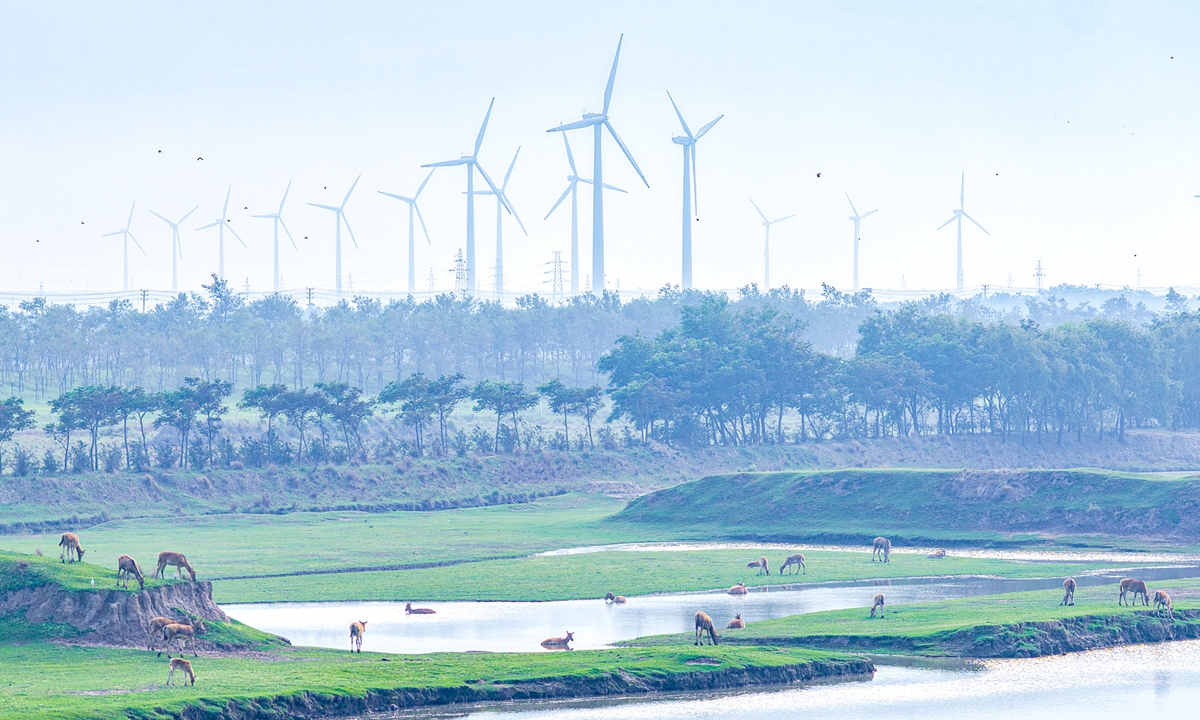
"Building an ecological civilization concerns the well-being of the people and the future of the nation."
Chinese President Xi Jinping, also general secretary of the Communist Party of China Central Committee and chairman of the Central Military Commission, once pointed out: "Respecting, adapting to, and protecting nature is essential for building China into a modern socialist country in all respects."
In the 15th Five-Year Plan (2026-2030) for national economic and social development, securing major breakthroughs in strategic tasks of overall importance to Chinese modernization and making major new progress in the Beautiful China Initiative are key objectives.
The Global Times is launching a series of articles titled "BeautifulChinaING." From the perspectives of the beauty of nature, the beauty of systems and the beauty of lifestyles, the series uses both Chinese and international cases as entry points. Through field reporting and video storytelling, it explores how green development has become a defining feature of Chinese modernization while showcasing China's role as a responsible major country providing global public goods.
In this installment, we turn our focus to China's Ecological and Environmental Code and the changes it may bring to everyday life. From neighborhood noise and restaurant fumes to ecological conservation and green development, this article examines how the code brings scattered environmental rules into a unified framework, strengthens public participation and turns the vision of a Beautiful China into concrete rules for environmental governance.
A power drill starts in a neighboring apartment just as someone is trying to sleep. Cooking fumes from the restaurant downstairs drift through an open window. A modified car roars past a residential compound, while a food delivery arrives wrapped in layers of plastic. According to China's new Ecological and Environmental Code, these seemingly minor, everyday frictions - closely tied to how people live, sleep, cook, commute and consume - are precisely where environmental governance begins.
The code will take effect on Saturday. Spanning 1,242 articles across five books, it is China's second law to be formally titled a "code," following the Civil Code. It brings pollution control, ecological conservation and green and low-carbon development under one legal framework, while incorporating 10 existing laws.
Speaking at a press conference held on Thursday, Minister of Ecology and Environment Li Gao said that the Ecological and Environmental Code is of major and far-reaching significance for safeguarding the public's ecological and environmental rights and interests in accordance with the law, consolidating the legal foundation for building a Beautiful China, and accelerating modernization characterized by harmony between humanity and nature.
As China puts the vast environmental code into force, a practical question arises: How will it make daily life quieter, cleaner and easier to navigate - and turn the vision of a Beautiful China into rules that people can see, use and help enforce?
From doorsteps to ecosystems
In Mengla county, Southwest China's Yunnan Province, elephant ranger Li Shengqian once walked through a large area of flattened cornfields. While local rangers were attending training, more than 40 wild Asian elephants descended from the mountains, ate the ripe sweet corn, rolled in a mineral-rich pond and then retreated into the forest to sleep.
A local forestry official told the Global Times that an insurance company would assess the damage and compensate the villagers.
Yunnan has gradually turned such compensation from an improvised response into an institutional arrangement. Under its wildlife-damage public liability insurance system, governments pay the premiums, affected farmers do not contribute, and insurers assess and compensate their losses.
By August 2024, Xishuangbanna had invested 225 million yuan ($33.3 million) in the scheme and paid 215 million yuan in compensation for wildlife damage, including 188 million yuan for losses caused by Asian elephants.
The code gives such practices a clearer legal foundation. Article 828 requires local governments in areas seriously affected by wildlife damage to combine compensation with preventive measures, including protective barriers, warning signs and monitoring and early-warning systems. It also stipulates compensation for deaths, injuries and losses to crops or other property resulting from the protection of specified wildlife. In this way, the cost of conservation is not left solely to those living closest to protected animals.
For environmental volunteers, the change may be felt in a different way. Yun Jianli founded the Green Hanjiang environmental group in Central China's Hubei Province in 2002 and has spent more than two decades investigating pollution along the Hanjiang River.
Yun said volunteers previously often had difficulty dealing with legal matters. "When dealing with some environmental issues, we often had to search across different laws to find a legal basis," she told the Global Times. "The new code integrates these systems, providing clearer and more authoritative legal support for environmental actions."
That support extends beyond a general recognition of participation. The code requires public consultations in environmental planning, standard-setting and impact assessments; mandates accessible reporting channels and feedback for real-name reports; and prohibits employers from retaliating against workers who report pollution by their own organizations.
For volunteers such as Yun, public participation is therefore no longer only an appeal to civic responsibility. It is positioned as a legally protected part of environmental governance.
After Saturday, the code's practical effect will be tested in equally concrete ways.
From blueprint to reality
Turning this wide breadth of laws into a single code requires more than collecting existing statutes. Lawmakers first had to decide which rules should be fully integrated, which specialized laws should remain in place and where new legal foundations were needed.
Compilation formally began on November 3, 2023. A leadership group coordinated major issues, a drafting task force handled the text, and an expert committee provided specialist input. The draft was reviewed twice as a whole and twice in separate books before it was adopted on March 12, 2026, completing a process of nearly two and a half years.
The approach was described as "moderate codification." Huang Wei, a deputy director of the Legislative Affairs Commission of the National People's Congress (NPC) Standing Committee and coordinator of the drafting task force, told the People's Daily that the aim was not to absorb every environmental law into one volume. Instead, different groups of laws were treated differently.
Ten laws covering environmental protection, environmental impact assessment, cleaner production and major forms of pollution control were revised and incorporated in full, and will no longer remain as separate statutes once the code takes effect. Core provisions from more than 20 other laws involving forests, grasslands, major river basins, national parks, energy and resource conservation were included while those laws were retained. For newer fields such as climate governance and the carbon-peaking and carbon-neutrality goals, the code establishes guiding principles while leaving room for more detailed legislation.
The code was also shaped outside meeting rooms in Beijing. In May 2025, Chinese and international students at a vocational university in Southwest China's Chongqing Municipality discussed the draft, with their suggestions sent to the national legislature through a grassroots legislative contact point, according to the Xinhua News Agency.
Ma Jun, director of the Institute of Public and Environmental Affairs, also took part in seminars organized by the Legislative Affairs Commission of the NPC Standing Committee and other departments during the code's drafting. His organization later submitted detailed proposals when the draft was released for public comment, he told the Global Times.
"The open legislative process was significant in itself, as it prompted broad public discussion of decades of environmental legislation and the major issues of our time," Ma said. "It has enabled the code to engage with cutting-edge international legislative theories while remaining grounded in the practical challenges China faces," Ma said.
During the four rounds of public consultation, more than 7,000 people participated and submitted over 20,000 comments. The drafting team conducted research in more than 30 localities and held 17 seminars in Beijing with national legislators, government departments, companies, social organizations and scholars, the People's Daily reported.
Suggestions from the public and grassroots contact points helped shape rules on emerging pollutants, urban greening, climate governance and legal liability. Following deliberations at the final NPC session, more than 200 additional changes were made, including over 100 substantive revisions, Xinhua reported.
Passing the code, however, did not automatically align the many rules beneath it. The Ministry of Ecology and Environment said it was reviewing more than 500 related documents, including over 30 administrative regulations, more than 80 departmental rules and over 400 normative documents. Provisions that conflict with, fail to connect with or no longer fit the code will be revised or repealed, while supporting rules and technical standards are being updated.
Innovative tools have also been used in preparation for the code's implementation. An AI-assisted system has been developed to address the difficulties and high costs involved in assessing ecological and environmental damage. The system has been piloted free of charge in 28 provincial-level regions and applied in more than 300 cases, reducing average assessment time by over 80 percent, according to the ministry.
Wider legal practice
Environmental codification is not unique to China. Sweden adopted its Environmental Code in 1998 and brought together rules previously contained in 15 acts. It then entered into force on January 1, 1999. France issued the legislative part of its Environmental Code in September 2000. Germany also attempted to establish a unified environmental code, but the project stalled in 2009.
In terms of the Ecological and Environmental Code of China, an article published in the international journal Carbon Research described it as a systemic response to the interconnected crises of pollution, biodiversity loss and climate change, while also identifying incomplete supporting rules, uneven legal coordination and limited public awareness as implementation challenges.
An editorial by the People's Daily published on Thursday noted that the enactment of the Ecological and Environmental Code signifies a major transformation in China from a participant to a leader in global environmental governance, providing a legislative model that can be studied by countries around the world, especially developing countries.
Lu Weifu, a researcher at the University of Science and Technology of China, wrote in an article published by China Environment News that the code's distinctive feature lies in combining systematic integration with an open structure. Unlike environmental codes primarily shaped around conventional pollution control, China's code places pollution prevention, ecological conservation and green and low-carbon development within the same framework. Its separate book on green and low-carbon development also brings climate change and economic transformation into the core structure of environmental law.
Ma said that conventional air-pollution control and climate governance had long operated in relatively separate legal systems. By connecting the control of conventional pollutants with reductions in greenhouse-gas emissions, he said, the code could support more coordinated regulation and reduce duplicated systems and administrative work.
The larger shift is from dealing with environmental harm only after it occurs to addressing how energy, industry and consumption generate that harm in the first place, he said.
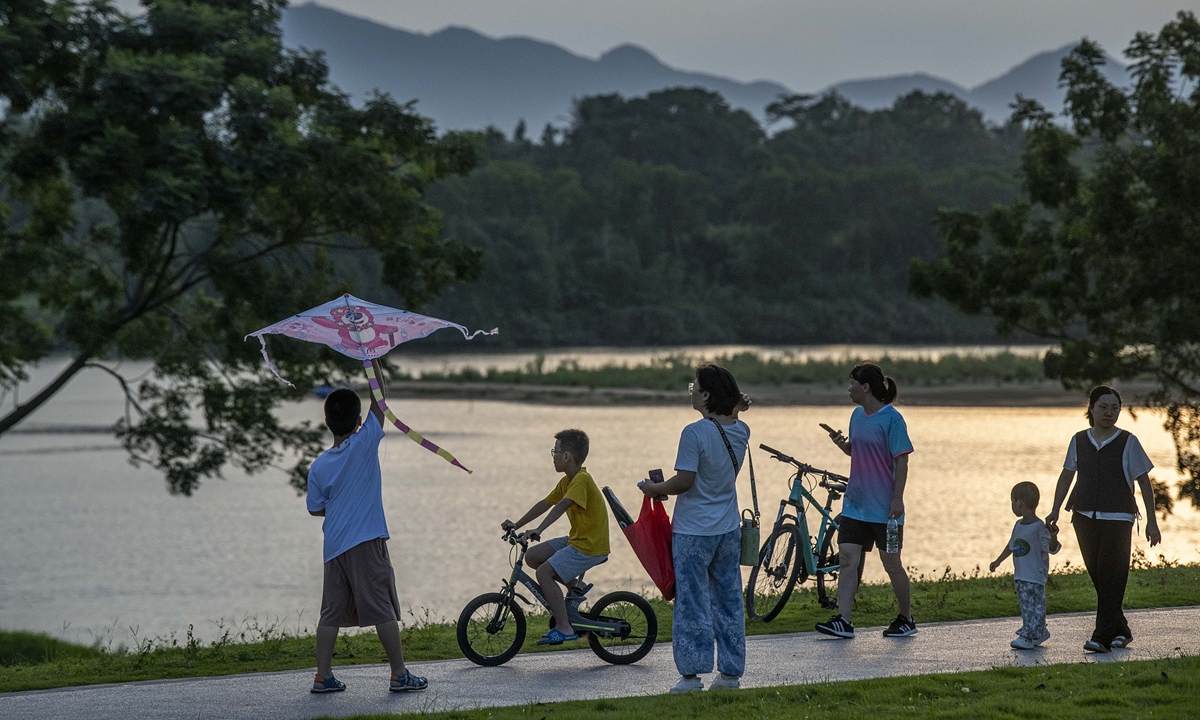
That is where this wide-ranging legal experiment returns to the scale at which environmental protection is ultimately felt - the life outside a person's window.
。经激烈角逐,庄志诚获冠军。

二 | 此次竞赛为网安人才搭建交流平台,旨在锻造网安铁军,助力网络强国建设。 东南网8月20日报道(本网记者 林夏悦)8月20日,福建省第一届“闽盾杯”网络安全职业技能竞赛决赛在福州顺利举行。本次竞赛由省委网信办、省人社厅、省总工会、团省委联合主办,是福建首届面向网络安全从业人员举办的省级一类职业技能竞赛。 竞赛自启动以来,得到全省各地各行业的高度关注与广泛响应,652名网络安全从业者踊跃参赛。经层层选拔,来自福州、厦门、漳州、泉州、三明、莆田、龙岩、宁德等地的80名选手脱颖而出晋级决赛。参赛选手沉着应战,围绕理论知识与综合实操两大模块,在基础设施安全加固、网络安全事件响应、数字取证调查及夺旗挑战赛等高仿真场景中展开激烈角逐,彰显了福建网安队伍昂扬向上的靓丽风采。

三 | 历经近6个小时的鏖战,北京启明星辰的庄志诚得分最高,荣获冠军;兴业银行的谢振哲、省税务局的潘耀霖分获亚军和季军;来自国网泉州供电公司、兴业银行、厦门电信、华能(福建)能源、宁德烟草、国网福建电科院等单位的7名选手获得优胜奖。此次竞赛为全省网络安全从业人员搭建了高水平竞技交流平台,有效发挥了职业技能竞赛在人才培养和选拔激励中的示范引领作用。 下一步,省委网信办将联合有关单位持续深化竞赛成果转化,以实战淬炼锻造知识型、技能型、创新型网安铁军,为推进网络强国、数字中国建设贡献福建力量。
Current article:http://gw2.runtunpaixufenjuduishuang.pics/list_q1m/5mvfb2e.html
Published on:22:04:50
我的网站相关阅读
- 舟山福彩“航行的公益”健康护民生
- 2026年A股震荡行情下还能理财吗?C1、C2两类投资者稳健配置指南
- 喜大普奔!北岛这条重要的旅游公路今天恢复通车啦……
- 拜登特朗普“约架”成功!六月在CNN过招,九月决战ABC
- PM to dedicate Rs 15,670 cr projects during two day Gujarat visit
- 名记看淡快船新赛季前景:难进季后赛 或仅30多胜
- 【精美・德育】启航思辨梦想 践行未来之路——从青少年模拟政协到北京市两会中的五中蓝
- 惨遭前女友殴打+死亡威胁!五大三粗的NBA壮汉,为何也会被家暴?
- 离开卡上线不远:小米穿戴设备确认将支持成都天府通 NFC 交通卡
我的网站最新文章
- 你敢信?全中国连夜排队买票,就为了看一部烂片
- 大乐透第26081期开5注一等奖
- 英国推出的小米混合3:6128GB,价格4334元
- 莱克电气:2026年半年度净利润约2.32亿元,同比下降45.8%
- 美方公布对伊经济制裁细则,威胁将为伊朗洗钱的实体移出美元体系;伊朗公开穆杰塔巴一段视频;内塔尼亚胡称伊朗曾企图暗杀其子
- 四川南充:“十五五”规上工业总产值锚定翻番 加快建成省域经济副中心,四川南充:“十五五”规上工业总产值锚定翻番 加快建成省域经济副中心
- 手机靓号进价5000元能卖5万 高峰每月能卖200个号码
- 拜登签署新行政命令“扩大美国生物制造”再引国内CXO板块跳水 反复风险“预演”或倒逼产业发展_企业_拜登
- 为方便F1新加坡大奖赛主办方筹备赛事 赛道周围将封路七天
- 十年来 2.8亿农村群众饮水安全问题得到解决_解文韬_李国英
- 速成车引热议!一汽丰田高管:不会为抢占市场风口 盲目追逐上新速度
- Palestinian death toll in West Bank surges as Israel pursues militants following Hamas rampage
- 马云又有了一个大动作
我的网站随机推荐
- गुरुग्राम में लावारिस कुत्तों को खाना खिलाने पर डंडे से पीटा, युवक ने सेक्टर 29 थाने में दी शिकायत
- 星载AI实现地表异常在轨自动识别
- 【童眼看世界】——消防站的奇趣大冒险
- 农业农村部组织专业力量指导台风灾后恢复生产
- 队记:哈里森23年因医疗主管话语权过重将其解雇 后者效力近20年
- 德安东尼回忆湖人执教往事:愿意接手是因为纳什
- 日照港焦炭市场动态
- Biden Urges Combating Human Smuggling After Dozens of Migrants Found Dead in Texas
- 您好,顺风1月下旬开始试运行:上海、杭州、广州、成都等6个城市。
- India Australia talk Ukraine
- Karthi Charges Into Chaos in The Playful and Punchy Trailer of Vaa Vaathiyaar
- 政声直达·热点快评 | AI客服再聪明,也得给人工留扇门
- 华为Mate50入选国家博物馆 与北斗系列终端同框